Why this flashlight buying guide matters for importers and distributors
Flashlights remain a staple product across retail, industrial maintenance, security, outdoor recreation and project contracting. For buyers—importers, wholesalers, distributors and project contractors—selecting the right flashlight models requires balancing performance, safety, regulatory compliance and supply-chain factors. This guide condenses the technical and commercial considerations you need to evaluate suppliers, compare products, and minimize downstream risk.
Core specifications that affect buyer decisions
When comparing flashlight models, prioritize measurable specifications. Vendors sometimes advertise peak lumens or theoretical runtimes; ask for test data and standard conditions.
Luminous output and beam characteristics
- Lumens: Total light output. Common categories: utility (100–500 lm), tactical/search (500–3,000 lm), and high-output/search & rescue (>3,000 lm).
- Beam distance: Meter measurement of usable beam. More meaningful than lumens for search and rescue and security applications.
- Beam type: Flood (wide, short range), spot (narrow, long throw), and hybrid/zoom. Optics: reflectors vs TIR lenses—TIR gives tighter control and uniform hotspot.
- CRI and CCT: Color rendering index (CRI) indicates color accuracy—important for inspection tasks. Correlated color temperature (CCT) affects perception: 2700–3500K warm, 4000–5000K neutral, 6000–6500K cool daylight.
Runtime, power management and modes
- Runtime: Measured at a specific lumen level until the light drops to a standard percentage (often 10%). Confirm test conditions (battery state, ambient temperature).
- Modes: Multiple output levels, strobe/SOS, and lockout features. Electronic drivers that manage steady and regulated output are preferred for consistent performance.
- Thermal management: High-output LEDs require heat sinks and thermal throttling to prevent overheating. Metal housings (aluminum) dissipate heat better than plastics.
Batteries and charging options
Battery choice affects cost, shipping, runtime and the product’s positioning.
- Primary (non-rechargeable): Alkaline (AA/AAA), lithium CR123A. Lower unit cost but higher lifetime cost for frequent use.
- Rechargeable: NiMH (AA), Lithium-ion (18650, 21700), LiPo. Li-ion offers highest energy density and best for high-output lights.
- Charging: Built-in USB-C, micro-USB, magnetic connectors, or external chargers. USB-C is increasingly standard for fast charging and convenience.
- Battery protection: Look for built-in BMS/protection against overcharge, over-discharge and short circuit—critical for safety and warranty claims.
Durability and environmental ratings
Durability determines suitability for industrial, contractor and outdoor applications.
Ingress protection and impact resistance
- IP ratings: IPX4 (splash resistant), IPX7 (submersible to 1m for 30 min), IP68 (dust-tight and long-term immersion). For dusty job sites choose IP66–IP68.
- IK impact: IK ratings (e.g., IK07, IK08) quantify resistance to mechanical impact. Important for rugged and tool-belt use.
- Materials: Anodized aluminum provides a durable, heat-dissipating housing. Engineering plastics reduce weight and cost but may offer lower thermal performance.
Corrosion, sealing and finishes
Contractors and marine applications need corrosion-resistant finishes and reliable O-ring seals. Ask suppliers for salt-spray test data when corrosion resistance is relevant.
Safety, testing and certifications
Regulatory compliance protects your brand and avoids customs delays or product recalls.
Electronics and electrical safety
- CE and RoHS: Basic market entry requirements for Europe (electromagnetic compatibility and hazardous substances).
- UL/ETL: Relevant for the U.S. market for electrical safety.
- FCC: When the driver or charger includes wireless communications or could emit RF interference.
Battery and transport regulations
- UN38.3: Mandatory testing for lithium cells and batteries for air and sea transport. Ensure batteries supplied with flashlights have appropriate test documentation.
- IATA/IMDG: Lithium battery shipping regulations vary by mode and packaging. Decide whether to ship products with batteries installed, separately, or without batteries to optimize logistics.
- ATEX / IECEx: Required for flashlights intended for explosive atmospheres (mining, petrochemical). Ask for certified intrinsically safe designs if needed.
Practical quality control (QC) checklist for buyers
Before placing a full production order, create a checklist for sample approval and production checks.
- Electrical and photometric tests: Measured lumens, beam distance, color temperature and CRI at each mode.
- Runtime and charge cycles: Runtime tests at standard ambient temperature and charge/discharge cycle life for rechargeable models.
- Drop and impact tests: Per product spec (e.g., 1m–2m) to simulate field handling.
- Ingress and sealing: IP tests and seal integrity checks.
- Battery tests: Verify UN38.3 test reports, BMS operation, and shipping configuration.
- Packaging and labeling: Product labels, CE/UL markings, warning labels and user manuals localized where required.
Sourcing, pricing and supply-chain considerations
Cost drivers and logistics choices determine landed cost and time-to-market.
Common cost drivers
- LED emitter and driver quality—high-efficiency LEDs and smart drivers cost more but improve runtime and reliability.
- Battery chemistry—rechargeable Li-ion cells and protected cells add to unit cost and shipping complexity.
- Housing materials and finish—anodized aluminum and high-IP sealing increase manufacturing time and cost.
- Testing and certifications—pre-certification testing and documentation add upfront cost but lower long-term risk.
MOQ, lead times and inventory planning
- Minimum order quantities (MOQs) can vary widely—expect higher MOQs for customized branding, packaging or custom LEDs.
- Lead times: Standard models may ship in weeks; customized tooling, finishes or new certifications extend lead times to months.
- Inventory strategy: For batteries, staggered replenishment and air freight for urgent orders may be necessary due to shipping restrictions.
Customization, private label and packaging
Private-label flashlights can differentiate your offering. Typical customization options include color, engraving/laser logo, packaging inserts, manuals and bundled accessories (holsters, lanyards, chargers).
- Branding: Laser engraving on metal housings is durable; printed logos can wear over time.
- Packaging: Retail-ready blister packs, display boxes, or bulk packs for wholesalers—consider UPC placement, barcodes and multilingual manuals.
- Component sourcing: Negotiate whether the manufacturer or buyer sources batteries and accessories. This affects warranty and liabilities.
Warranty, after-sales support and spare parts
Clear warranty terms and availability of spare parts reduce ownership costs and returns.
- Warranty period: Typical B2B warranties range from 12 to 36 months depending on product class. Define coverage for batteries separately.
- Repairability: Availability of spare LEDs, drivers, O-rings and chargers matters for service contracts and contractors who need predictable uptime.
- RMA process: Agree on defect thresholds, return logistics and replacement timelines before ordering.
Testing protocol recommendations
Insist on standardized lab reports or perform third-party testing for critical claims.
- Photometric testing: ANSI/NEMA FL-1 standard provides definitions for lumen output, runtime, beam distance and peak beam intensity—use FL-1 results for apples-to-apples comparison.
- Environmental tests: IP, thermal cycling, salt spray (if applicable) and vibration/drop testing.
- Battery safety: UN38.3 report, cell batch traceability and cycle life testing at standard temperatures.
Selecting the right flashlight models by use case
Match product features to end-use to avoid overpaying or underspecifying.
- Retail/consumer: Emphasize price, packaging/branding, runtime and USB charging convenience.
- Industrial/contractor: Focus on impact resistance, IP rating, tool-belt mounts and serviceability.
- Security/police/tactical: High-output, spot throw, ergonomic grips, and strobe/SOS functions; consider rechargeable backup cells.
- Inspection/technical: High CRI, neutral CCT (4000–5000K) and narrow to medium flood beams for color-critical tasks.
- Search & rescue: Very high lumen output, long throw, rugged housings, and proven thermal management.
Evaluating suppliers and placing orders
Follow a structured procurement process to reduce risk.
- Request detailed spec sheets and FL-1 photometric reports for each SKU.
- Ask for samples and conduct field trials under representative conditions.
- Verify certifications and test reports, including UN38.3 for batteries and any region-specific approvals.
- Negotiate lead time, MOQ, packaging terms, and quality inspection terms (pre-shipment inspection, AQL).
- Agree RMA, warranty and spare parts supply terms in writing.
Logistics: shipping batteries and packaging choices
Decide on shipping configuration early—this affects transport costs and regulatory paperwork.
- Ship with no batteries to simplify logistics and avoid dangerous-goods classification; include battery compartments sized for customer-supplied cells.
- Ship batteries separately in compliance with IATA/IMDG rules and UN38.3 documentation.
- For high-value or urgent shipments, air freight is faster but more regulated for lithium batteries and more expensive.
How JECTE supports global buyers
As a lighting manufacturer and industrial supply partner, JECTE offers B2B services tailored to importers, wholesalers and contractors: product customization, testing and certification support, UN38.3 battery documentation, QC inspections, flexible MOQ options and supply-chain planning. We can provide pre-production samples, FL-1 photometric tests and collaborate on private-label packaging so you can launch a reliable flashlight product line with predictable lead times.
Checklist before you place a bulk order
- Obtain sample approvals and independent photometric and battery safety reports.
- Confirm IP/IK ratings and materials specification in the purchase order.
- Agree on MOQ, unit price, packaging, lead time and after-sales terms.
- Decide battery shipping configuration and confirm UN38.3 documentation.
- Plan for spare parts and establish RMA procedures.
Conclusion
Buying the right flashlight for your channel requires more than comparing lumen numbers. Prioritize validated performance data, battery safety and transport compliance, durable construction, and reliable supplier practices. Use trial samples and standardized testing (ANSI/NEMA FL-1 and UN38.3) to verify claims. A strong supplier partnership—one that supports customization, documentation and quality control—reduces commercial risk and speeds time to market.
Contact JECTE to discuss product specifications, private-label options, regulatory support and pilot orders for flashlights tailored to your market and application needs.
Related Products
Explore related products from JECTE for your next sourcing project.
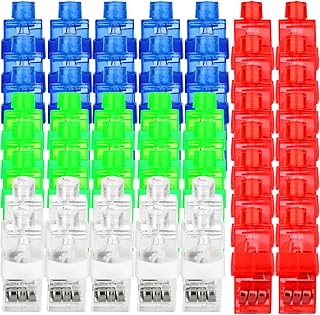 60Pcs LED Finger Lights Flashlights for Kids Glow Party Favors Birthday Christmas Halloween Supplies
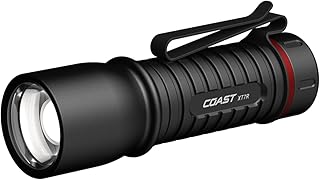 XT7R 1500 Lumen Rechargeable LED Flashlight with Magnetic Mount, Slide Focus, and Pocket Clip, Black
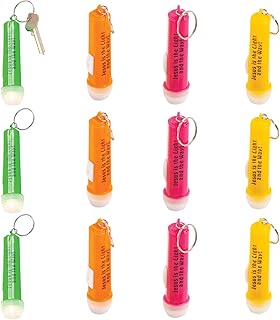 Express Jesus is The Light Flashlight Key Chains (Set of 12) Religious Party Supplies - VBS 2026 Vacation Bible School Supplies/Decor
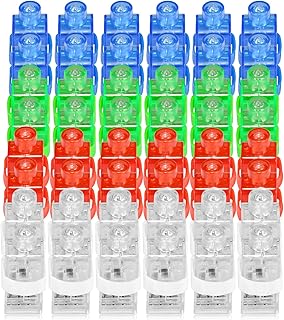 CADE ELECTRONIC Finger Lights- 50Pcs Finger Flashlights for Kids-Bachelorette Party Favors - Party Supplies for Parties Cheering Novelty Toys for Kids, Adult