Introduction: Why a focused flashlight buying guide matters for B2B buyers
Flashlights remain essential tools across industrial, public safety, construction, and retail channels. For lighting importers, wholesalers, distributors and project contractors, selecting the right flashlight SKUs affects product performance, warranty claims, regulatory compliance and margins. This guide consolidates technical criteria, procurement best practices and logistics considerations so buyers can evaluate suppliers, avoid costly surprises, and scale reliably.
Understand the main market segments and use cases
Different end uses demand different flashlight features. Identifying the target segment helps prioritize specifications and certifications:
- Tactical & public safety: High output, durable housings, strike bezels, strobe modes, tailcap switches, and often MIL-STD testing.
- Industrial & construction: Robust IP/IK ratings, long runtime, wide-beam options, magnetic or hands-free mounting, and rechargeable systems.
- Mining & utilities: Intrinsically safe or ATEX-certified variants, long-term battery systems, and high-impact resistance.
- Inspection & maintenance: Focused beams, adjustable spot-to-flood optics, consistent color temperature and good color rendering (CRI).
- Consumer & emergency kits: Cost-effective, reliable, with USB charging and multi-mode outputs.
Key performance specs every buyer should request
Ask suppliers to provide clear, testable values for these parameters—preferably measured to the ANSI/NEMA FL1 standard or equivalent:
- Lumens: Total light output. Useful for overall brightness comparison, but compare alongside beam data.
- Peak beam intensity (candela) and beam distance: Beam focus and reach—critical for tactical and search applications.
- Runtime: Operational hours at specified output (e.g., lumen level). Beware of “runtime” without defined conditions.
- Battery type and capacity: Cell chemistry (alkaline, NiMH, Li-ion 18650/21700, LiFePO4), cell model, and mAh rating.
- Charging: On-board USB-C, magnetic pogo, docking station or external charger. Include charge time and charging protection details.
- Color temperature & CRI: Kelvin value and CRI—important for inspection and photography-related tasks.
- Dimensions & weight: With and without batteries. Important for packaging, shelf placement and end-user ergonomics.
- Ingress protection (IP): IPX7/IPX8 for water submersion; IP66/IP67 for dust and water. Exact test level matters for outdoor and industrial use.
- Impact resistance (drop height) and IK rating: Confirm drop height (e.g., 1m, 2m, 3m) and IK code if provided.
- Operating temperature range: Essential for cold-storage, mining, or desert use cases.
Standards, certifications and transport rules to verify
Regulatory compliance varies by region and product design. For export-ready, low-risk shipments, insist on the following where applicable:
- ANSI/NEMA FL1: Standardizes performance claims (lumens, runtime, beam distance, water & impact). Use it to compare models objectively.
- IEC 60529 / IP rating: Defines ingress protection against solids and liquids.
- IEC 62133: Battery safety for portable sealed secondary cells (required for many markets for Li-ion/NiMH batteries).
- UN38.3: Mandatory tests for transporting lithium batteries. Sellers must provide passed test reports and compliant packaging/labels for air/sea/land transport.
- CE / UKCA: Essential for the EU and UK markets for electrical safety and EMC (if relevant).
- RoHS & REACH: Confirm hazardous-substance limits and registrations for European markets.
- UL / ETL / CB scheme: Product safety approvals useful for North American and global market acceptance (recommended for high-volume channels).
- ATEX / IECEx: Required for intrinsically safe flashlights used in explosive atmospheres (mining, chemical plants).
Battery choices and their trade-offs
Battery selection impacts runtime, weight, supply chain complexity and shipping. Consider these options:
- Alkaline (primary): Low cost, easy to ship, good for consumer SKUs, limited runtime compared to rechargeable cells.
- NiMH: Rechargeable, robust for moderate temperatures, but generally lower energy density than Li-ion.
- Li-ion (18650, 21700): High energy density, long runtime and compact size—common for tactical and professional lights. Requires IEC 62133 and UN38.3 compliance and strict transport controls.
- LiFePO4: Lower energy density than Li-ion but safer chemistry and longer cycle life—useful in safety-critical applications.
Charging options and safety features
Rechargeable flashlights benefit from modern charging convenience but buyers must validate protection features:
- On-board USB-C charging is preferable for retail convenience; ensure overcharge, overcurrent, reverse polarity and temperature protections are implemented.
- Magnetic or docking chargers can speed handling at job sites; request charging cycle life and MTBF data.
- For smart or connected flashlights (BLE), ensure wireless regulatory certifications (FCC, CE) and software update policy.
Build materials, thermal management and optics
Material choice affects durability, heat dissipation and perceived value:
- Aluminum (6061/6063): Common for high-end flashlights; offers good heat conduction and impact resistance. Check anodizing hardness (Type II vs Type III).
- Polymer housings: Cost-efficient, lighter, often used for consumer models; verify UV resistance and flammability rating.
- Optics & lenses: TIR lenses vs glass reflectors influence beam shape and efficiency.
- Thermal management: High-output LEDs need effective heat path to avoid thermal throttling. Ask for thermal curves and lumen maintenance (L70/L50) data.
Quality control, testing and sample strategy
Mitigate production risk with a disciplined sampling and testing process:
- Request factory certifications (ISO 9001) and supplier QA procedures.
- Order engineering samples first and run independent lab verification for lumens, runtime, IP, drop and battery safety (IEC 62133 / UN38.3 where applicable).
- Use pre-shipment inspection (AQL) and consider production-line witnessing for large orders.
- Insist on detailed test reports for LED binning, photometric tests (integrating sphere), thermal cycling, salt spray and vibration where relevant.
Packaging, labeling and retail readiness
Proper packaging reduces damage and accelerates channel acceptance:
- Request master carton dimensions, units per carton, and weight to calculate freight and palletization.
- Provide artwork for private labeling, multilingual manuals, and product safety labels (battery warning, disposal info).
- Ensure packaging meets handling requirements for batteries (UN packaging, labeling) and retail display needs (blister vs box, UPC/Barcode printing).
Shipping lithium batteries: practical logistics notes
Battery regulations significantly affect shipping cost and lead times:
- Air shipments with lithium batteries typically face the highest restrictions and costs. Use UN38.3-compliant cells and ensure carriers accept the battery class.
- Sea and road shipments may be more economical for large volumes, but ensure proper declaration and packaging.
- For pack variants (battery inside flashlight vs shipped separately), confirm classification (UN3480/UN3481) and documentation (MSDS, test reports).
Warranty, spare parts and after-sales support
B2B buyers should negotiate clear warranty and after-sales terms to protect margins and end-user satisfaction:
- Define warranty length (typical 1–3 years) and what is covered (LED module, driver, battery) and excluded (physical abuse).
- Secure access to spare parts and battery replacements; ask about lead times and pricing for service parts.
- Request a plan for handling RMA, repair or credit—critical for distributors and contractors with installations or kits in the field.
Pricing drivers and negotiation tips
Understand elements that drive price so you can negotiate effectively:
- Bill of materials: LED brand, battery cells, driver complexity and housing material are the main cost drivers.
- Certifications and testing: Pre-certified models cost more but reduce market entry friction.
- Tooling and customization: One-off housing or lens tooling raises unit cost and MOQ.
- MOQ and lead time: Higher MOQs often unlock lower per-unit costs. Negotiate staging or rolling deliveries to manage inventory.
Recommended specification checklist to request from suppliers
Use this spec sheet when requesting quotes and samples:
- Model number and picture
- ANSI FL1 test report or equivalent photometric report
- Lumens, peak candela, beam distance, runtime (with conditions)
- Battery type, cell model, capacity (mAh), and protection details
- Charging method, input specs and charge time
- Materials, finish (anodize type / coating) and weight
- IP and IK or drop-test details
- Operating temperature, warranty terms
- Certifications: IEC 62133, UN38.3, CE/UKCA, RoHS, UL/ETL, ATEX/IECEx if required
- Packing details, MOQ, lead time, sample policy
Partnering with a manufacturer: what to expect from JECTE
As a lighting manufacturer and industrial supply partner, JECTE supports global buyers with production scalability, testing capabilities and export experience. When evaluating manufacturers, look for:
- Transparent test documentation and willingness to accommodate third-party lab verification.
- Flexible MOQ and clear lead-time commitments.
- Experience handling battery regulatory compliance and export logistics.
- Options for private label, packaging customization and after-sales support.
Final checklist before you place an order
- Confirm performance claims are supported by lab reports (ANSI FL1 or equivalent).
- Verify battery safety (IEC 62133, UN38.3) and shipping classification for intended routes.
- Validate IP/IK and drop-test results for your use case.
- Agree MOQ, unit price, lead time, payment terms and warranty in writing.
- Plan for pre-shipment inspection and establish AQL criteria.
- Confirm packaging, labeling, and retailer/marketplace requirements (barcodes, language, safety labels).
Conclusion
Sourcing flashlights for distribution or projects requires a balance of technical knowledge, regulatory awareness and logistical planning. Use objective performance standards, require battery and safety certifications, and adopt a staged procurement approach—samples, testing, pre-shipment inspection—to reduce risk. Working with a manufacturer experienced in lighting and battery logistics, such as JECTE, can shorten time-to-market and improve reliability for global channels.
Next steps for buyers
Prepare your target application profile, prioritize the top 3 specifications for each SKU (e.g., lumen/runtime/IP rating), and request a detailed spec sheet and sample from your shortlisted suppliers. That will allow you to validate performance, negotiate pricing based on BOM and certifications, and establish an efficient logistics plan for safe, compliant delivery of flashlights to your markets.
Related Products
Explore related products from JECTE for your next sourcing project.
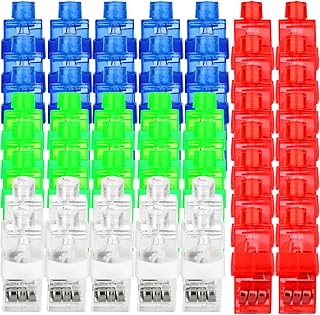 60Pcs LED Finger Lights Flashlights for Kids Glow Party Favors Birthday Christmas Halloween Supplies
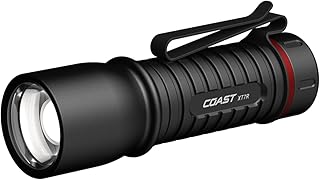 XT7R 1500 Lumen Rechargeable LED Flashlight with Magnetic Mount, Slide Focus, and Pocket Clip, Black
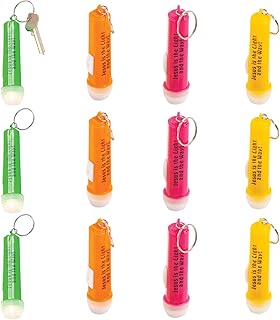 Express Jesus is The Light Flashlight Key Chains (Set of 12) Religious Party Supplies - VBS 2026 Vacation Bible School Supplies/Decor
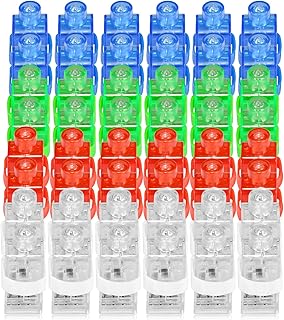 CADE ELECTRONIC Finger Lights- 50Pcs Finger Flashlights for Kids-Bachelorette Party Favors - Party Supplies for Parties Cheering Novelty Toys for Kids, Adult