Introduction: Why this flashlight guide matters for B2B buyers
Purchasing flashlights in commercial volumes requires more than comparing lumens. For importers, wholesalers, distributors and project contractors, the right procurement decisions balance performance, safety, compliance, cost and long-term support. This guide explains technical specs, product categories, regulatory requirements, quality-control checks and commercial terms you should negotiate with a manufacturer or supplier.
Flashlight product categories and common applications
Organize your assortment by customer need. Typical B2B product families include:
- General-purpose handheld – Retail, household and general maintenance. Low-to-mid lumen output, simple controls.
- Tactical & security – High output, strobe modes, weapon-mount options. Favored by security firms and law enforcement.
- Industrial & work lights – Flood or hybrid beams, robust housings, magnetic bases, rechargeable systems for trades and construction.
- Headlamps and wearable lights – Hands-free use for contractors, miners, outdoor gear retailers.
- Explosion-proof / intrinsically safe – ATEX/IECEx certified for hazardous locations like oil & gas, chemical plants.
- Marine and search & rescue – Corrosion-resistant finishes, long-range beams, emergency signaling.
- Compact EDC and specialty – Keychain lights, penlights, and custom-branded promotional items.
Key technical specifications to evaluate
Request standardized measurements and realistic performance curves from suppliers.
Lumen output and beam characteristics
- Initial lumens – Peak light output at switch-on. Useful for marketing but not the whole story.
- Effective lumens/runtime curve – How output drops over time due to thermal management and driver settings. Ask for manufacturer-provided runtime curves at each mode.
- Lux and beam distance – Measured at 1 meter and converted to candela/beam distance (IEC standard formulas). For search and rescue, prioritize candela and throw; for work lights, prioritize flood and lux at short range.
Power source and battery options
- Disposable cells – AA/CR123A may be preferred for retail convenience and easier shipping (less hazardous), but limited runtime.
- Rechargeable Li-ion – 18650, 21700, or built-in batteries offer higher energy density and long runtimes. Ensure UN38.3 and IATA compliance for air shipment.
- Charging method – USB-C fast charging is now common; wireless charging or proprietary docks may be preferred for certain markets.
LED emitter, color temperature and CRI
- LED type – High-power single-die emitters or arrays. Ask for LED binning and manufacturer source to estimate consistency.
- Color temperature (CCT) – 2700–4000K warmer for close-range tasks, 5000–6500K for high-contrast outdoor use.
- CRI (Color Rendering Index) – Higher CRI (80+) may be important for inspection or medical-related uses.
Durability: ingress, impact and environmental specs
- IP ratings – IP65 (dust-tight + water jets) is minimum for industrial; IP67/IP68 for immersion resistance.
- IK / impact – IK07–IK10 ratings indicate resistance to mechanical impacts and are useful for heavy-duty applications.
- Thermal management – Robust heat sinks and thermal throttling strategies prevent LED degradation.
Controls and features
- Mode switching (single-button vs multi-mode), memory, lockout function, strobe/SOS.
- Accessories: diffusers, filters, mounts, belt holsters, magnetic bases.
Compliance and certifications to request
Different markets require different documentation. Ensure your supplier can provide up-to-date certificates.
- CE and RoHS – Required for the EU; RoHS restricts hazardous substances.
- REACH – Chemical compliance for EU goods.
- UL/ETL – For certain chargers and integrated systems in the USA/Canada.
- IATA/UN38.3 – Mandatory for shipping lithium batteries by air.
- ATEX / IECEx – For intrinsically safe/explosion-proof lights used in hazardous locations.
- MIL-STD / IP/IK test reports – Useful for security, defense or industrial projects that require ruggedization proof.
Quality control and testing your supplier should perform
Verify the supplier’s QC process and insist on documented test results.
- Incoming material inspection (IQC) – Housing alloys, lenses, LED bins and batteries.
- Functional testing – Mode verification, output measurement with integrating sphere, runtime and thermal testing.
- Aging/burn-in – Typical 4–24 hour burn-in to detect early failures.
- Environmental tests – Salt spray, thermal cycle, vibration and drop tests per agreed standards.
- Battery safety testing – Overcharge, short-circuit, and UN38.3 test reports for cells and packs.
Procurement and commercial considerations
Understand cost drivers and negotiate terms that protect margins and supply continuity.
Price drivers
- Materials: aircraft-grade aluminum, anodizing, stainless hardware, and glass vs polycarbonate optics.
- Electronics: high-efficiency LED drivers, thermal protection, charging circuits, and smart features.
- Batteries: cell chemistry and branded vs commodity cells.
- Certifications and testing costs: ATEX/IECEx and UL testing add cost and time.
- MOQ and customization: lower OEM prices often require higher minimum orders.
Packaging, labeling and retail readiness
- Box design and interior packing to minimize transport damage; master carton and palletization.
- Retail-ready displays, barcodes (EAN/UPC), multilingual manuals and warranty cards.
- Regulatory labeling for batteries and hazardous goods; include disposal guidance for batteries in line with regional rules.
Logistics, lead time and incoterms
- Sampling timeline: typically 2–4 weeks to produce functional prototypes and performance reports.
- Production lead time: commonly 6–12 weeks depending on complexity, certifications and capacity.
- Shipping: factor in weight and express vs sea freight. For Li-ion products, airfreight has restrictions and extra paperwork.
- Agree incoterms (FOB, CIF, DDP) to define responsibilities and cost allocation during transit.
Warranty, spare parts and after-sales support
Strong after-sales support reduces returns and builds distributor confidence.
- Define warranty scope: LEDs, driver electronics, batteries, mechanical housing and seals.
- Spare parts availability: provide replacement batteries, chargers, O-rings and switches.
- Repair vs replacement policy and turnaround times for service centers.
- Technical documentation and troubleshooting guides for reseller training.
OEM/ODM and private-label considerations
If you plan to source customized products, evaluate the supplier’s R&D and tooling capabilities.
- Design freedom: custom anodizing, laser engraving, custom PCB firmware and packaging.
- Tooling and mold costs: understand amortization and MOQ implications.
- Software/firmware: custom mode sequences, battery fuel gauges and smart features may require additional testing and IP agreements.
Procurement checklist: ask your flashlight supplier
- Can you provide detailed lumen vs runtime curves and integrating-sphere test reports?
- Which LED manufacturer and bin do you use? What is the CCT and CRI?
- Battery specifics: chemistry, capacity (mAh), cell model, UN38.3 test reports and shelf life.
- Mechanical specs: materials, finish, weight, dimensions, IP/IK ratings and drop-test reports.
- Certifications and lab reports (CE, RoHS, ATEX/IECEx, UL as applicable).
- Sample lead time, MOQ, per-unit pricing at different order tiers and tooling charges.
- Warranty terms, spare parts catalog and RMA processes.
- Packaging artwork and minimum quantities for retail-ready packs or palletization requirements.
Typical procurement timeline
- Initial inquiry & quote: 3–7 business days.
- Samples and basic testing: 2–4 weeks.
- Design refinement / tooling: 4–8 weeks (if customized).
- Production run: 6–12 weeks depending on capacity and certification tests required.
- Shipping and customs: sea freight 3–6 weeks; air freight 3–10 days (subject to battery restrictions).
Sample specification template for RFQs
Provide suppliers with a concise spec sheet to speed accurate quotes:
- Product name/model
- Target lumen output and runtime per mode
- Beam type (spot, flood, hybrid) and beam distance (m)
- Battery type and capacity; charging method
- Housing material and finish
- Ingress/impact ratings (IP, IK)
- Required certifications and specific testing (e.g., ATEX, UN38.3)
- MOQ, targeted FOB/CIF price, target lead time
- Packaging, labeling and barcode requirements
Partnering with a manufacturer: what JECTE brings to buyers
As a lighting manufacturer and industrial supply partner, JECTE can support global buyers with OEM/ODM capabilities, production scale, testing services and export documentation. Key support areas include quality-controlled manufacturing, battery safety testing and assistance with certification pathways for target markets. For distributors and contractors requiring long-term supply, JECTE can offer tailored packaging, spare-part sourcing and after-sales logistics coordination.
Final tips for a successful flashlight procurement
- Prioritize realistic runtime and thermal testing over marketing lumens; ask for independent lab reports where possible.
- Factor in battery logistics early—compliance and shipping rules for Li-ion cells can delay delivery.
- Negotiate clear warranty and spare-parts commitments to protect downstream customers and service margins.
- Consider a phased approach: buy a small test lot for field validation before committing to a large production run.
- Ensure all required certifications for your sales territories are in place prior to bulk orders to avoid regulatory holds.
Well-documented specifications, clear contractual terms and rigorous testing are the foundation of reliable, profitable flashlight procurement. Use the checklists and RFQ template above to compare suppliers objectively and reduce risk across your supply chain.
Related Products
Explore related products from JECTE for your next sourcing project.
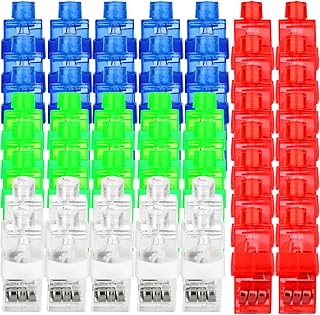 60Pcs LED Finger Lights Flashlights for Kids Glow Party Favors Birthday Christmas Halloween Supplies
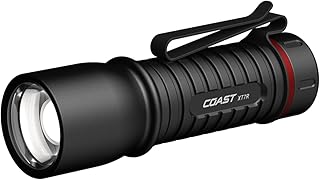 XT7R 1500 Lumen Rechargeable LED Flashlight with Magnetic Mount, Slide Focus, and Pocket Clip, Black
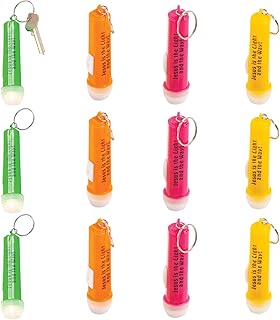 Express Jesus is The Light Flashlight Key Chains (Set of 12) Religious Party Supplies - VBS 2026 Vacation Bible School Supplies/Decor
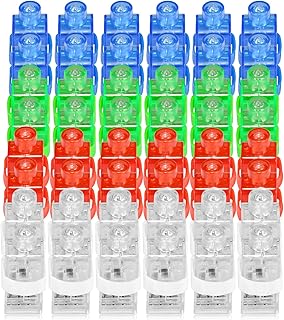 CADE ELECTRONIC Finger Lights- 50Pcs Finger Flashlights for Kids-Bachelorette Party Favors - Party Supplies for Parties Cheering Novelty Toys for Kids, Adult