Introduction
Flashlights remain a staple product for distributors, wholesalers, and project contractors worldwide. From everyday carry (EDC) units to intrinsically safe lights for hazardous environments, buyers need to evaluate technical performance, compliance, logistics and total cost of ownership. This guide summarizes practical, procurement-focused criteria to assess flashlight suppliers and product lines, helping you reduce risk, control margins, and match products to end-use requirements.
Flashlight categories to stock or specify
Grouping flashlights by application helps align specifications with customer needs. Typical categories to consider:
- Everyday Carry (EDC): Compact, pocketable lights for consumers and tradespeople. Prioritize size, build quality, and rechargeable options.
- Tactical & Security: High-output, durable lights with strobe modes, weapon-mount options, and fast user interface.
- Industrial & Worksite: Rugged lights with anti-roll designs, long runtimes, high-IP and impact ratings; often used by contractors and utilities.
- Inspection & Precision: Narrow-beam or adjustable-focus lights for detailed work—good optics, stable color temperature and low flicker are important.
- Headlamps & Hands-free: For installers, miners, and emergency teams—consider battery placement, strap durability and beam modes.
- Hazardous-Location & Mining: Certified intrinsically safe or explosion-proof lights (ATEX/IECEx) for flammable atmospheres.
Core technical specifications—what buyers must verify
Technical data sheets often emphasize lumens; buyers should evaluate the full spec set to ensure real-world suitability.
Lumen output vs usable light
Lumens describe total light output but not how the beam is delivered. Match lumen ratings to use-case: EDC 100–1,500 lm, tactical 500–3,000 lm and worksite lights from several hundred up to 2,500 lm depending on application. Check runtime at each output mode and confirm advertised lumen levels are measured under standard conditions.
Beam distance, peak beam intensity and beam shape
Beam distance (meters) and peak beam intensity (candela) matter for search, signaling and long-range tasks. Flood vs spot optics determine usefulness: smooth reflectors give long-range throws; textured reflectors or TIR optics provide even flood for work zones.
ANSI/NEMA FL 1 standard
Require or prefer products tested to ANSI/NEMA FL 1. This standard defines consistent measurement of lumen output, runtime, beam distance, peak intensity, water resistance, and impact resistance—critical for meaningful comparisons between models.
Color temperature and CRI
Color temperature (2,700–6,500K) affects perception. Higher CRI (Ra>70–90) matters for inspection, electrical and medical tasks where color rendering is important.
Battery chemistry and runtime
Common battery types include AA/AAA, CR123A, 18650/21700 Li-ion cells, and integrated lithium polymer packs. Rechargeable Li-ion packs provide best energy density and lifecycle economics; disposable chemistries offer logistics simplicity for low-cost SKUs. Evaluate:
- Run time at defined output levels
- Cycle life for rechargeable packs
- Availability and cost of replacement cells
- Protection circuits (BMS/PCM) for overcharge/discharge and short-circuit safety
Charging methods
USB-A, USB-C and magnetic charging are increasingly standard. USB-C with USB-PD simplifies faster charging and compatibility. Confirm charging port ingress protection and replaceability of charging cables, and test charging durability over cycles.
Materials, finish and ergonomics
Aluminum alloy (6061-T6) with Type III hard anodizing is common for durability. For low-cost product lines, reinforced polymers or glass-filled nylon are typical. Consider tail-cap designs, pocket clips, anti-roll features, and glove-friendly switches for trade applications.
Ingress & impact protection
IP ratings (IP65, IP67, IP68) indicate dust and water resistance; choose IP67 or higher for outdoor/industrial use. IK or drop ratings (often in meters) and MIL-STD drop claims (e.g., MIL-STD-810G) are useful for rugged categories.
Thermal management and driver electronics
High-output LEDs produce heat. Check for adequate heat sinks, thermal throttling behavior and quality of the electronic driver. Poor thermal design leads to early lumen depreciation and reduced component life.
User interface & safety features
Simple, repeatable interfaces are best for worksite teams: mode memory, quick access to high or low modes, and lockout functions to prevent accidental activation. Tactical lights may need momentary and constant-on tailswitches.
Compliance, testing and certifications
Regulatory compliance and test documentation reduce customs delays and protect buyers from late-stage surprises.
- Safety & EMC: CE (EU), UKCA (UK), UL/CSA (North America) where applicable.
- Environmental: RoHS, REACH compliance for European markets.
- Battery & transport: UN38.3 test reports, MSDS, IATA and IMDG shipping declarations for lithium cells/packs.
- Performance: ANSI/NEMA FL 1 performance testing for lumen/runtime/beam distance.
- Hazardous locations: ATEX/IECEx or regional mining approvals for intrinsically safe or explosion-proof models.
Sourcing and supply-chain considerations
Beyond product specs, procurement success depends on clear agreements around MOQ, lead times, customization and quality assurance.
- MOQ & pricing bands: Negotiate pricing that scales with order volume; establish clear re-order tiers.
- Samples & validation runs: Always run pre-production samples and a small pilot batch to validate performance and packaging.
- Tooling & customization: Expect additional lead time and cost for unique molds, anodizing colors, or custom printing/packaging.
- Labeling & documentation: Agree on language, markings, and warranty cards for destination markets.
- Packaging & retail-ready options: Retail blister, boxed kits, or bulk packaging options impact freight and on-shelf appeal.
- Spare parts: Secure supply of replacement batteries, O-rings, chargers and lenses to support after-sales service.
Typical cost drivers
Understanding what drives cost helps you balance price vs performance:
- LED brand and binning quality — higher-performance LEDs raise cost.
- Battery chemistry and protection circuitry — higher-capacity cells and BMS add to BOM cost.
- Optics and reflector complexity — TIR lenses and precision reflectors increase price.
- Housing materials and surface treatments — Type III hardcoat anodize, stainless parts are costlier than basic anodize or plastic.
- Certifications and testing — ATEX/IECEx and UN38.3 testing generate one-time and recurring costs.
- Packaging, labeling and logistics — retail-ready packaging and special handling for batteries affect landed cost.
Quality control checklist for incoming shipments
Implement a structured incoming inspection protocol. Key checks include:
- Visual inspection: finish, machining, O-rings and markings.
- Functional tests: on/off, modes, strobe, lockout and interface operation.
- Performance tests: lumen output and runtime measured against FL 1 claims.
- Battery tests: voltage, charging behavior, internal resistance sampling where practical.
- Environmental tests: sample IP and drop tests per agreed acceptance criteria.
- Documentation verification: certificates, test reports, MSDS and labeling.
Transport and regulatory restrictions for batteries
Battery shipping rules are strict and vary by carrier and destination. Key considerations:
- Cells vs assembled packs—cells are more tightly regulated.
- For air freight, comply with IATA DGR requirements for lithium-ion and lithium-metal cells/packs.
- Pack capacities (Wh rating) determine permitted shipping methods and need for special packaging/labels.
- Declare battery content on commercial invoices and shipping documentation; provide UN38.3 reports and MSDS when required.
Warranty, after-sales and spare parts
A clear warranty policy and spare-parts availability create trust with wholesale buyers and end customers. Recommended practices:
- Offer a defined warranty window (e.g., 12–36 months) depending on product tier and intended use.
- Define failure modes covered vs wear-and-tear exclusions.
- Stock and supply critical spare parts: O-rings, chargers, batteries, and switches.
- Provide repair manuals or authorized repair channels if offering long-life industrial products.
Buyer recommendations by use-case
Quick guidance to match product lines to end customers:
- Retail EDC: Focus on compact, rechargeable models with attractive packaging, USB-C charging and 1–2 year warranties.
- Trade & Construction: Durable IP67+ lights with anti-slip grip, glove-friendly switches, long runtimes and clear FL 1 data.
- Security & Tactical: High-lumen models with reliable driver electronics, multiple switching options and robust impact ratings.
- Inspection/Medical: High-CRI LEDs, stable output, low flicker and consistent color temperature.
- Hazardous/Mine: Only purchase models with ATEX/IECEx or local mining certifications and documented intrinsic safety testing.
How JECTE supports global buyers
As a lighting manufacturer and industrial supply partner, JECTE offers services designed for importers, wholesalers, distributors and contractors:
- Product development and customization: color, branding, packaging and firmware tuning to meet market needs.
- Pre-production sampling and pilot-run validation to confirm performance and packaging before full production.
- Assistance with testing and certification—supporting ANSI/NEMA FL 1, UN38.3, CE/UKCA, ATEX/IECEx and other regional approvals.
- Flexible MOQ options and tiered pricing for launch and scale-up phases.
- Quality assurance programs, factory inspection and third-party testing on request.
- Export documentation, customs-friendly labeling and battery transport compliance support.
Closing checklist before placing an order
- Confirm target performance vs ANSI/NEMA FL 1 test reports.
- Validate battery documentation and shipping classification (UN38.3, MSDS).
- Request production samples and run QC tests on a pilot batch.
- Agree warranties, spare-parts lead times and RMA procedures in writing.
- Negotiate MOQ, pricing tiers and packaging options aligned with your sales channels.
Conclusion
Sourcing flashlights for global distribution requires combining technical evaluation with supply-chain rigor. Prioritize verified performance data, battery and transport compliance, clear warranty and spare-parts commitments, and a supplier that can support testing and scale. JECTE partners with buyers to provide customizable, certified flashlight solutions, pilot testing and flexible production options—helping you bring reliable products to market quickly and compliantly.
Related Products
Explore related products from JECTE for your next sourcing project.
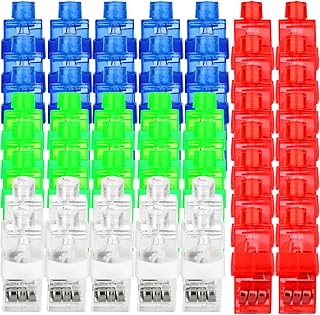 60Pcs LED Finger Lights Flashlights for Kids Glow Party Favors Birthday Christmas Halloween Supplies
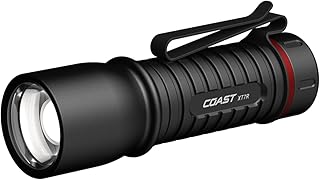 XT7R 1500 Lumen Rechargeable LED Flashlight with Magnetic Mount, Slide Focus, and Pocket Clip, Black
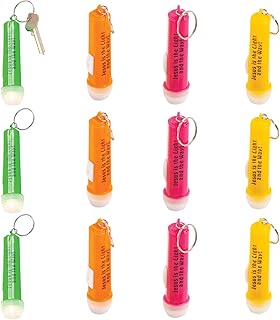 Express Jesus is The Light Flashlight Key Chains (Set of 12) Religious Party Supplies - VBS 2026 Vacation Bible School Supplies/Decor
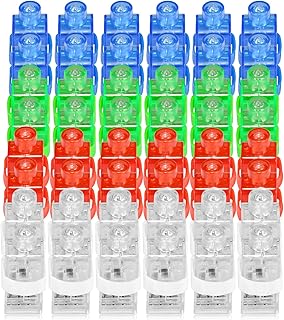 CADE ELECTRONIC Finger Lights- 50Pcs Finger Flashlights for Kids-Bachelorette Party Favors - Party Supplies for Parties Cheering Novelty Toys for Kids, Adult