Overview: Why this guide matters for B2B buyers
Flashlights are a commodity category with wide variance in quality, compliance and margins. For importers, wholesalers, distributors and project contractors, the difference between a reliable product and a liability often comes down to specification detail, component selection, and supply-chain controls. This guide focuses on the practical attributes and procurement processes that reduce risk, ensure compliance, and improve customer satisfaction.
Key technical specifications to evaluate
When qualifying flashlight models, require detailed specifications (not marketing copy). Ask suppliers for measured performance data and test reports. Core parameters to review:
Luminous output and beam characteristics
- Lumens: Peak output in ANSI lumens is the first indicator of brightness. Verify with an independent lumen measurement where possible.
- Beam throw (candela / meters): Candela or stated throw distance show focused-beam capability—important for search or tactical models.
- Beam pattern: Flood (wide), throw (narrow), or adjustable. Match to end-use: worksite illumination favors flood; security and search often require throw.
LED type and optical system
- LED manufacturer: LEDs from established manufacturers (e.g., Cree, Osram, Nichia) offer predictable performance and lifespan.
- Color temperature (CCT): 2700–3000K (warm), 4000–5000K (neutral), 6000–7500K (cool). Select based on application—warm for close work, neutral for true color rendition.
- CRI: Color Rendering Index matters for inspection and professional use—look for CRI >70 for general tasks and >80 for color-critical jobs.
- Reflectors and lenses: Smooth vs textured reflectors affect beam shape. Polycarbonate lenses should be optical-grade and scratch-resistant.
Runtime, power management and modes
- Runtime: Look for ANSI-standard runtime specs at specific modes (high/medium/low). Runtime figures should state the criteria (e.g., until 10% of initial lumen).
- Modes: Multiple levels, strobe, SOS—ensure modes are clearly defined and accessible in the UI. Lockout features prevent accidental activation.
- Thermal regulation: High-output flashlights should have temperature management (PWM control, thermal throttling) to prevent premature failure.
Batteries and charging
- Battery chemistry: Alkaline (AA/AAA) for low-cost disposables; CR123A for high power; protected/unprotected Li-ion (18650/21700) for rechargeable high-output lights. LiFePO4 is used where safety and long life are prioritized.
- Integrated vs external batteries: Integrated rechargeable batteries simplify user experience but complicate shipping and replacement; external cells are easier to replace in remote fields.
- Charging: USB-C fast charge, magnetic chargers, or dedicated docking stations. Confirm charge circuitry protections and charge cycle expectations.
- Battery management: Battery protection (overcharge, over-discharge, short-circuit) and clear labeling for correct cell type are essential.
Materials, durability and environmental ratings
Product longevity starts with the housing and protective systems.
Housing materials and finishes
- Aluminum alloys: 6061-T6 and 7075 are common—offer strength and thermal conduction. Type III hard-anodized finishes resist abrasion and corrosion.
- Polymers: Polycarbonate and reinforced plastics reduce weight and cost but must be UV-stabilized and impact-resistant for professional use.
- Seals and buttons: Use silicone or nitrile O-rings and IP-rated switches to maintain ingress protection.
Ingress protection and impact ratings
- IP rating: IPX4 (splash-proof), IPX7 (temporary submersion), IP68 (continuous submersion). For field and marine use IPX7 or higher is recommended.
- Impact resistance: Specify drop height (e.g., 1–2 meters) and request MIL-STD-810G or equivalent shock testing for tactical/industrial lines.
Certifications, compliance and market-specific requirements
Certifications reduce liability and support clearance at customs. Confirm the supplier can provide documentation for each target market.
- CE and RoHS: Required for EU market entry—CE relates to product safety/EMC as applicable; RoHS restricts hazardous substances.
- FCC/EMC: For models with wireless connectivity or charging electronics, FCC or regional EMC compliance may be required.
- UN38.3 and dangerous goods compliance: Batteries, especially lithium-ion, must pass UN38.3 testing for transport. Shipping by air requires IATA Dangerous Goods compliance.
- ATEX / IECEx / intrinsically safe: Needed for equipment used in potentially explosive atmospheres (mining, petrochemical). Specify certification if your customers operate in these sectors.
- National approvals: UL/CSA may be necessary for North American sales in some channels. Check regional requirements early.
Testing and quality control buyers should request
Insist on measurable test data rather than manufacturer claims:
- Photometric reports (IES files): Provide lumen distribution curves, candela and lux at distances for each mode.
- Lumen and runtime test reports: ANSI/NEMA FL1 standard tests if available—ensures consistency across suppliers.
- Environmental tests: Salt spray (corrosion), thermal cycling, and humidity exposure for coastal or industrial markets.
- Mechanical tests: Drop tests, vibration tests and ingress tests documented with pass/fail criteria.
- Battery testing: Cycle life, protection circuit testing and cell IMR or INR chemistry verification for Li-ion cells.
Packaging, labeling and after-sales considerations
Proper packaging protects goods and supports retail presentation or bulk distribution.
- Packing: Inner cartons with foam or separators, outer cartons with correct strength ratings. For bulk shipments, strong corrugate to prevent deformation in container stowage.
- Labeling: Include model number, lot/batch code, manufacturing date, CE/FCC marks where applicable, battery warnings and disposal instructions.
- Manuals and warranty: Multilingual instruction manuals, safety guides and warranty cards. Define warranty terms—constructive response times and RMA procedures reduce downstream friction.
Supply chain and sourcing strategy
Protect margins and continuity with sound sourcing practices.
MOQ, pricing and lead times
- Negotiate a realistic minimum order quantity (MOQ) that aligns with SKU proliferation and inventory risk. Typical MOQs vary widely by model and customization level—clarify packaging and accessory inclusion.
- Request tiered pricing by volume and forecast-driven commitments to secure capacity and pricing stability.
- Lead times for customized flashlights with special batteries, logos, or packaging can extend substantially—build lead time buffers for seasonal peaks.
OEM vs private label vs white label
- White label: Faster time-to-market but limited differentiation.
- Private label / OEM: Allows customization (colors, logos, firmware) and better margin control but increases MOQ, tooling and quality management demands.
- Discuss revision control, pre-production samples, UAT (user acceptance testing) and production verification before full runs.
Logistics and international shipping of battery-powered flashlights
Batteries trigger specific transport and customs rules. Plan shipments early and work with logistics partners experienced in DG (Dangerous Goods).
- For separate lithium-ion cells or batteries, UN38.3 documentation is mandatory. Many carriers restrict or refuse shipments without it.
- Integrated batteries still require correct declaration—air transport rules may impose limitations on state-of-charge for lithium batteries.
- Consider sea freight for large volumes containing batteries to simplify constraints and reduce cost; still ensure IMDG compliance.
- Labeling requirements include battery handling labels, package orientation, and emergency contact information.
Procurement checklist for flashlight buyers
Use this checklist when qualifying suppliers and approving orders:
- Obtain full spec sheet: lumens, candela, beam profile, CCT, CRI, runtime per mode.
- Request photometric and runtime test reports (ANSI or equivalent).
- Verify LED and battery cell OEM names and datasheets.
- Confirm IP and impact ratings with test evidence.
- Collect certifications required for market entry (CE, RoHS, UN38.3, ATEX if needed).
- Review packaging specs and minimum order quantities.
- Ask for pre-production sample and production sample approval process.
- Define warranty terms, RMA process and spare parts availability.
- Map shipping rules for batteries and choose carrier with DG experience.
- Plan initial order and replenishment cadence to balance inventory carrying cost and service levels.
How JECTE supports global buyers
As a lighting manufacturer and industrial supply partner, JECTE can assist global importers, wholesalers and contractors with specification-led sourcing, testing coordination and compliance documentation. Typical support includes:
- Technical spec development and custom product iterations (OEM/ODM).
- Pre-production samples, IES photometric files and ANSI-standard testing.
- Assistance obtaining CE, RoHS, UN38.3 and other market certifications.
- Packaging design, branding and cost-optimized logistics for battery-containing shipments.
- QC programs: incoming component checks, in-line production tests and final inspections.
Final considerations
Buying flashlights at scale requires balancing performance, compliance and total cost of ownership. Prioritize verified test data, transparent supply chains and clear warranty and RMA pathways. Early involvement of technical, regulatory and logistics stakeholders will prevent costly delays at market launch. When choosing a manufacturing partner, evaluate their testing capability, willingness to support customization, and experience managing battery-related compliance and shipping.
Use the procurement checklist above, require measurable data rather than marketing claims, and align product selection to the end-user application for long-term satisfaction and fewer returns.
If you would like a customized supplier qualification pack or help defining a specification for an OEM flashlight line, JECTE offers technical brief creation, sample management and full-production quality oversight to help global buyers bring reliable products to market.
Related Products
Explore related products from JECTE for your next sourcing project.
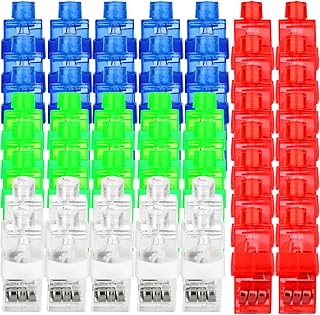 60Pcs LED Finger Lights Flashlights for Kids Glow Party Favors Birthday Christmas Halloween Supplies
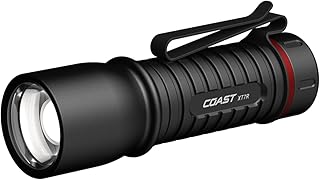 XT7R 1500 Lumen Rechargeable LED Flashlight with Magnetic Mount, Slide Focus, and Pocket Clip, Black
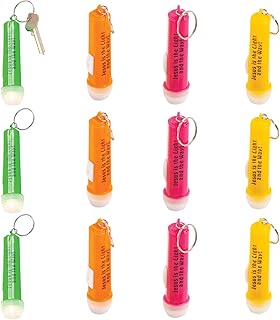 Express Jesus is The Light Flashlight Key Chains (Set of 12) Religious Party Supplies - VBS 2026 Vacation Bible School Supplies/Decor
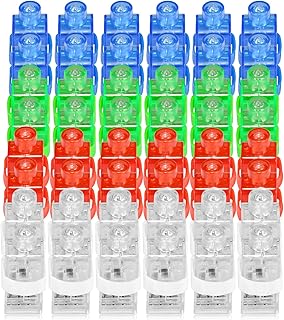 CADE ELECTRONIC Finger Lights- 50Pcs Finger Flashlights for Kids-Bachelorette Party Favors - Party Supplies for Parties Cheering Novelty Toys for Kids, Adult