Introduction: Why a B2B Buying Guide for Flashlights Matters
Flashlights remain a core product for lighting distributors, importers and project contractors across industries — from consumer retail to mining, oil & gas, security, and emergency services. Buying the right flashlight for your market requires more than price-shopping: technical performance, regulatory compliance, transport rules, warranty support and supplier capability all affect long-term cost and customer satisfaction. This guide equips procurement teams with the specifications, tests and sourcing questions needed to purchase and sell the right flashlights at scale.
Flashlight Categories and Typical Use Cases
Match product families to buyer demand and project requirements. Common B2B categories include:
- Everyday/utility flashlights — AA/AAA or integrated Li-ion, for retailers and general-purpose use.
- Tactical flashlights — high output, ruggedized, used by security, defense and law enforcement.
- Searchlights & long-range torches — very high candela/beam distance for rescue and perimeter surveillance.
- Inspection & penlights — focused beams for maintenance, medical, and industrial inspection tasks.
- Headlamps & hands-free lights — for construction, mining, caving and outdoor contractors.
- Area lights & floodlights — rechargeable high-CRI lights for work sites and emergency response.
- Explosion-proof / intrinsically safe flashlights — certified for hazardous atmospheres (oil & gas, mining, petrochemical).
Key Technical Specifications to Prioritize
Evaluate flashlights against standardized metrics to compare models reliably. For B2B purchases the following are critical:
Luminous Flux (Lumens)
Lumens indicate the total light output. Specify a practical lumen target for each market segment — e.g., 100–400 lm for general utility, 500–2,000 lm for tactical/search needs. Verify manufacturers supply tested lumen outputs under stable thermal conditions.
Beam Intensity (Candela) and Beam Distance
Candela measures concentrated beam strength; higher candela yields longer beam distance. For search or security flashlights candela and throw distance matter more than raw lumen figures.
Runtime and Power Management
Runtime depends on battery type, capacity and driver efficiency. Ask for runtime at listed output and runtime to a useful threshold (for example time to 10% of initial output). A smart driver that offers regulated output and thermal throttling extends useful life and safety.
Battery Type and Charging
Common battery systems: alkaline (disposable AA/AAA), NiMH rechargeable, and Li-ion (single-cell 18650/21700 or protected proprietary packs). USB-C fast charging and magnetic contact chargers are now standard on many rechargeable flashlights. For wholesalers check availability of replacement cells and compatibility with existing chargers in your market.
Durability: Materials, IP and Impact Ratings
Housing materials (6061-T6 aluminum, stainless steel accents, polycarbonate lenses) and surface treatments (hard-anodized Type III) influence longevity. Water and dust resistance are measured by IP ratings (IPX4, IPX7, IP68); impact protection is sometimes shown with IK ratings (e.g., IK07–IK10). For industrial use specify at least IPX7 and IK07.
Driver and LED Specifications
LED make (Cree, Osram, Nichia) and driver quality affect efficiency, color temperature and longevity. Offerings with high CRI (Color Rendering Index) are important for inspection and medical applications. Check for thermal management features to avoid early lumen depreciation and overheating.
User Interface & Modes
Mode sets (low, medium, high, strobe, SOS) should be intuitive for your target buyer. Tactical users often require momentary-on and instant high modes; industrial buyers may prefer dimming and lockout features to prevent accidental activation.
Regulatory Compliance and Certifications
Regulatory compliance is a major buying factor for global distribution and project procurement. Ask suppliers for documentation for each region and product type:
- CE marking and RoHS for Europe.
- FCC for models with wireless or RF features (e.g., Bluetooth controllers).
- UL or ETL listings for chargers and AC-powered components where applicable.
- ATEX / IECEx or intrinsic safety certifications for explosive atmospheres.
- UN38.3 testing and IATA/DGR compliance for lithium battery air transport.
- WEEE compliance and local recycle/disposal requirements for EU and other markets.
Explosion‑Proof and Intrinsically Safe Options
For oil & gas, mining and chemical plants, supply intrinsically safe flashlights certified to ATEX/IECEx or regional equivalents. Intrinsically safe designs limit energy and temperature so the device cannot ignite a flammable atmosphere. Confirm the device’s gas group, zone rating and maximum surface temperature (T-code) match the project’s hazardous area classification.
Packaging, Labeling & End-Customer Readiness
Retail-ready packaging, multilingual manuals, barcode/UPC labeling and accessory kits will accelerate distribution. For project sales include asset tagging, bulk-pack options, and service parts (replacement O-rings, lenses, chargers). Clear labelling for battery type and disposal is essential to avoid regulatory issues on shipment and in-country sale.
Battery Shipping and Logistics Considerations
Batteries are regulated cargo. Key constraints:
- Air transport of lithium batteries is tightly regulated under IATA DGR and ICAO provisions. UN38.3 test reports and proper declaration are required for airfreight.
- Some regions restrict the import of devices with non-removable batteries or require specific labelling.
- For ocean freight, packaging must still meet safety and segregation requirements.
Work with suppliers familiar with battery export documentation and choose Incoterms that match your logistics capability (EXW, FOB, CIF, DDP).
Quality Control, Testing and Sample Evaluation
Before scaling orders, establish a sampling and testing protocol to validate supplier claims and avoid costly recalls. A robust protocol includes:
- Sample verification of lumens, beam profile and runtime under controlled conditions.
- Drop and impact tests from specified heights; water ingress tests per declared IP rating.
- Charge cycle testing of rechargeable models (target 300–500 cycles or as specified).
- Thermal testing: measure surface temperature at high output over sustained periods to confirm safe operation.
- Battery safety tests: overcharge protection, short-circuit behavior and cell venting performance.
- Visual inspection of assembly quality, anodizing, lens seating, and O-ring installation.
Request a supplier QA report with each lot and insist on random pre-shipment inspection (PSI) from a third-party lab for larger orders.
Pricing Drivers and Total Cost of Ownership
Unit price is only part of the cost. Consider:
- Warranty and expected product lifetime — longer warranties often indicate manufacturer confidence and lower long-term replacement costs.
- Availability and cost of consumables (batteries, chargers, spare parts).
- After-sales and repair support — availability of service centers and spare parts for repairs affects lifecycle costs.
- Returns, RMA handling procedures and associated shipping costs.
Procurement Checklist for Flashlight Buyers
- Define target customer and use-case per SKU (retail, tactical, industrial, hazardous area).
- Set minimum technical requirements: lumen range, candela, runtime, IP/IK, battery system.
- Ask for test reports: lumen measurements, thermal tests, UN38.3, ATEX/IECEx (if applicable).
- Confirm battery shipping documentation and transport method for initial and replenishment shipments.
- Request MOQ, lead time, factory capacity and sample cost/time.
- Agree on packaging, labeling, serialisation and warranty terms up front.
- Schedule pre-shipment inspection and agree non-conformance remedies.
Supplier Evaluation Questions to Ask
- What are your manufacturing lead times and typical MOQ for retail-ready vs bulk industrial packaging?
- Can you provide recent test reports (lumens, runtime, UN38.3, IP/IK, ATEX/IECEx) for the exact model we intend to buy?
- Do you support OEM/ODM branding, custom packaging and private-label manuals? What are setup costs?
- What is your in-house quality control process and do you allow third-party PSIs?
- How do you handle warranty claims, RMAs and spare parts for B2B customers?
- Do you maintain records of batch traceability for batteries and LEDs?
- What transport method do you recommend for shipments with lithium batteries and can you manage necessary declarations?
Sample Evaluation Protocol (Practical Steps)
When you receive product samples, use a consistent evaluation routine:
- Inspect packaging and documentation for compliance and completeness.
- Measure initial lumen output and beam profile under controlled conditions.
- Run the flashlight at high and medium outputs to measure runtime and observe thermal behavior.
- Perform drop tests and water immersion tests if IP claims are made.
- Charge/discharge rechargeable units over several cycles to check for capacity fade or charging anomalies.
- Test switches, mode memory, and lockout functions for reliability and user ergonomics.
After-Sales Support, Warranty and Spare Parts
Define warranty terms (period and coverage) and ensure the supplier commits to spare parts availability for a defined period. For project contractors, request service-level agreements for replacement units and on-site support if required.
Why Partner with a Manufacturer Like JECTE
As a lighting manufacturer and industrial supply partner, JECTE can support B2B buyers with OEM/ODM options, compliance documentation, sample development and scalable production. When selecting a manufacturing partner, prioritize companies that provide:
- Transparent testing data and compliance certificates.
- Flexible MOQ and private-labeling capabilities.
- Understanding of lithium battery shipping and hazardous-area certifications.
- Pre-shipment inspection and after-sales support structures.
Conclusion: Turning Technical Requirements into Successful Sourcing
For importers, wholesalers and project contractors, sourcing flashlights that meet market expectations requires a structured approach: classify target use-cases, define minimum technical and regulatory requirements, validate samples with standard tests, and establish clear logistics and warranty agreements. Prioritize supplier transparency, test data and after-sales support to reduce risk and total cost of ownership. With the right partner and a repeatable procurement process, you can efficiently scale flashlight lines that perform reliably across retail and industrial markets.
Contact JECTE to discuss product families, OEM/ODM options, compliance documentation and sample programs built for global distribution and industrial projects.
Related Products
Explore related products from JECTE for your next sourcing project.
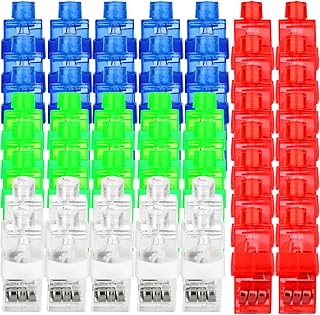 60Pcs LED Finger Lights Flashlights for Kids Glow Party Favors Birthday Christmas Halloween Supplies
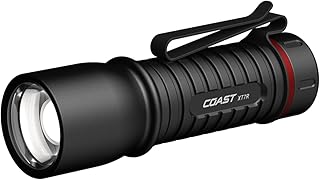 XT7R 1500 Lumen Rechargeable LED Flashlight with Magnetic Mount, Slide Focus, and Pocket Clip, Black
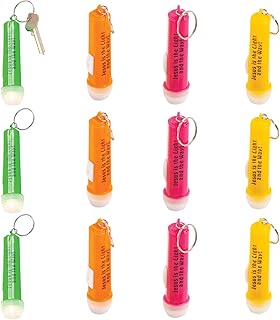 Express Jesus is The Light Flashlight Key Chains (Set of 12) Religious Party Supplies - VBS 2026 Vacation Bible School Supplies/Decor
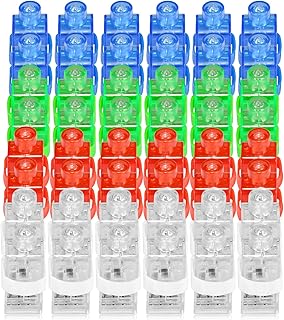 CADE ELECTRONIC Finger Lights- 50Pcs Finger Flashlights for Kids-Bachelorette Party Favors - Party Supplies for Parties Cheering Novelty Toys for Kids, Adult