Introduction: Why a focused flashlight buying guide matters for B2B buyers
Flashlights are a staple SKU for many distributors, importers and project contractors. Yet variations in LED modules, battery systems, durability ratings and compliance documentation can dramatically affect performance, returns and margins. This guide condenses what global buyers need to evaluate before placing volume orders, including technical specs, compliance, supply chain considerations, packaging and quality control. JECTE, a lighting manufacturer and industrial supply partner, provides these practical criteria to help you source dependable flashlights at scale.
Core technical specifications to compare
Start with objective, measurable features that define usability and performance. Standardize the metrics you require from suppliers so quotes are comparable.
Lumen output and beam profile
Lumens describe total light output, but buyers must also evaluate beam type: flood (wide coverage), spot (long throw) or adjustable/zoom. Request photometric data or manufacturer-test reports showing lux at specific distances and beam angle. For many commercial uses, balanced output (200–1000 lm) is common; industrial and tactical variants may exceed 2000 lm.
Runtime and power management
Runtime should be specified across modes (high, medium, low, strobe). Ask for runtime curves showing lumen drop over time. Verify the driver efficiency and thermal throttling strategy—high-output LEDs require proper current regulation to maintain consistent output and avoid premature thermal shutdown.
Battery type and charging options
Common power options include disposable alkaline, rechargeable NiMH (AA/AAA), and lithium-ion (18650/21700 or built-in packs). Integrated USB-C charging is increasingly requested for convenience. For B2B buyers, lithium-ion systems offer best performance per weight but require additional shipping documentation (UN 38.3).
LED emitter and optics
Identify the LED chip manufacturer (Cree, Nichia, Samsung, Lumileds) and binning if color consistency matters. Reflector and lens design control beam shape; TIR optics give tight, well-controlled beams, while smooth reflectors produce a broader hotspot. Specify CRI if accurate color rendering is necessary—industrial flashlights commonly use >70 CRI while inspection models may need >90.
Materials, finish and ergonomics
Common materials include anodized aluminum (lightweight, heat-dissipating) and polymer composites (impact-resistant, cost-effective). For harsh conditions choose marine-grade aluminum or corrosion-resistant coatings. Evaluate switch types (tailcap, side switch), grip design, clip options and balance for intended end-users.
Durability and ingress protection
Field performance depends on impact resistance, water resistance, and operating temperature range.
- IP rating: Specify IEC 60529 ratings such as IPX4 (splash resistant), IPX7 (immersion to 1m), or IP68 (continuous immersion). For outdoor and emergency use IPX7 or higher is standard.
- Impact rating (IK or drop height): Many tactical and industrial flashlights are tested to 1–2 meter drops. Ask for test method and results.
- Operating temperature: Lithium batteries and electronics have defined safe operating ranges—typically -20°C to 40°C for consumer-grade and -40°C for extreme-duty units.
Safety, compliance and testing
Documentation is a major differentiator for international buyers. Require proof up front to simplify customs clearance and assure product safety.
- CE and EMC/RED compliance for EU markets where applicable.
- RoHS for hazardous substance restrictions in electronics.
- UN 38.3 for transported lithium batteries; airlines and shippers require testing and proper packaging.
- IEC/EN standards for electrical safety, where relevant to charging circuits.
- IP and IK test reports, plus photometric and electrical safety lab results.
- Material safety data and MSDS sheets for battery chemistries.
Insist on supplier-provided test reports from accredited labs (e.g., SGS, Intertek, TUV) and keep copies in procurement records.
Packaging, labeling and retail readiness
Packaging impacts freight costs, retail presentation and B2B handling. Define your expectations early.
- Inner and master carton sizes with units per carton and pallet profile—ask for cube and weight to calculate landed cost.
- Retail packaging options: blister, window box, full-color printed box. Include SKU barcodes (EAN/UPC) and any retailer-specific labels.
- Instruction manuals and warranty cards in target languages—ensure legal disclaimers and battery handling instructions are localized.
- Accessory kits: holsters, lanyards, spare o-rings, charging cables and spare batteries influence perceived value and margins.
MOQ, lead time and cost structure
When negotiating, understand the supplier's minimum order quantity, tooling or mold costs for customizations, and realistic lead times.
- MOQ: Typical off-the-shelf models may have MOQs as low as a few hundred pieces. Custom or OEM runs often require 1,000+ units to justify setup.
- Lead times: Standard production runs can be 4–8 weeks after deposit; customized designs and new-tooling can extend to 12–16 weeks.
- Unit cost drivers: LED binning, battery chemistry, metal vs plastic housing, and inclusion of chargers or accessories. Request cost breakdowns for clearer margin planning.
- Payment terms: Suppliers may ask for 30% deposit and balance at shipment; negotiate staggered payments for long-term relationships.
Logistics, tariffs and shipping considerations
Logistics become critical with lithium batteries, high volumes, and multiple destinations.
- Classify products precisely with HS codes to determine tariffs. Battery-equipped products may have different codes than battery-free units.
- Shipping of lithium cells/packs requires UN 38.3 documentation and specific packaging—air freight restrictions often push shippers to sea freight for large volumes.
- Incoterms: Agree on FOB, EXW, CIF etc. to define risk and shipping cost responsibilities.
- Consider warehousing and fulfillment close to your primary markets to reduce lead time and improve service.
Quality control and acceptance testing
Implement a quality gate strategy prior to final acceptance to avoid costly surprises.
- Pre-production sample approval: Validate materials, finish, user interface and photometrics.
- In-line inspections: Random checks during production for soldering, assembly and functional testing.
- Final inspection: 100% functional test for critical functions and a statistically significant sample for visual and mechanical checks. Use AQL standards if applicable.
- Third-party lab testing for safety and regulatory compliance when introducing new models into regulated markets.
Warranty, returns and after-sales support
Clear post-sale policies reduce disputes and preserve margins.
- Warranty period: 1–5 years depending on expected lifecycle and price point. Define what is covered (electronics, housing, batteries) and excluded (abuse, water damage without proper sealing).
- RMA process: Agree on timelines for defect confirmation, repair vs replace rules, and shipping responsibilities.
- Spare parts and repair kits: Ensure availability and lead times for spare switches, o-rings, reflectors and drivers.
Customization and private label options
Private label and OEM/ODM services are common for lighting distributors seeking differentiation.
- Branding: Laser engraving, silk printing, and custom color anodizing.
- Software/firmware: Custom mode sets or lockout features may require development lead time and testing.
- Packaging and UPC integration: Private label packaging, multilingual manuals and SKU management.
- Small tooling changes vs full new mold: Clarify costs and minimums for each type of customization.
Risk management and supplier evaluation
Selecting the right manufacturing partner is as important as the product spec. Evaluate suppliers on capability, capacity and stability.
- Factory audits and capacity: Validate production lines for LED assembly, battery pack assembly, and final test benches.
- Certifications: ISO 9001 quality management and ISO 14001 environmental management are indicators of process maturity.
- Financial stability and references: Ask for export references and examples of similar projects.
- Intellectual property: Confirm design ownership and any exclusivity terms if you invest in tooling.
Practical purchasing checklist
- Define target use cases and prioritize specs (lumens, runtime, battery type, IP rating).
- Request detailed spec sheets, photometric reports and third-party lab certificates.
- Sample and validate in real-world conditions before committing volume.
- Agree on MOQ, lead times, price breaks and payment terms up front.
- Establish QC plans, inspection criteria and an RMA policy.
- Ensure shipping documentation for batteries and classify HS codes correctly.
Negotiation tips for buyers
Volume, clarity and long-term commitment are your strongest levers.
- Consolidate demand: Larger orders can unlock better pricing and faster lead times.
- Be specific: Clear technical specs reduce scope creep and cost overruns.
- Ask for tiered pricing: Show willingness to increase volume in exchange for reduced unit costs.
- Request open-book quotations for new projects to understand cost drivers and negotiate effectively.
- Protect your investment: Include acceptance testing clauses and production hold points in contracts.
Working with JECTE as your supply partner
JECTE manufactures a range of flashlights and offers OEM/ODM services with production capacity, testing facilities and export experience. We support B2B buyers with sample development, compliance testing, private-label packaging and logistics coordination. When partnering with JECTE, buyers gain a single point of contact for technical clarification, production scheduling and post-sale support.
Conclusion
Purchasing flashlights for distribution or project work requires a balance of technical specificity, regulatory diligence and supply chain planning. By standardizing requirements, insisting on test documentation, and building supplier relationships that include QC and warranty terms, buyers can reduce risk and improve margins. Use the checklist and procurement steps in this guide to streamline decisions, and engage manufacturing partners who can demonstrate consistent quality, transparent pricing, and export know-how—such as JECTE—when planning your next sourcing project.
Next steps
Compile your target product spec sheet using the categories in this guide. Request samples and documented test reports from shortlisted suppliers and plan an initial low-volume order to validate market response and internal handling before scaling. This approach minimizes risk and helps create a reliable, profitable flashlight line for your customers.
Related Products
Explore related products from JECTE for your next sourcing project.
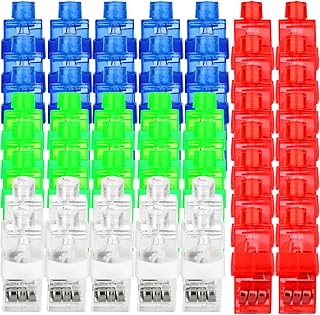 60Pcs LED Finger Lights Flashlights for Kids Glow Party Favors Birthday Christmas Halloween Supplies
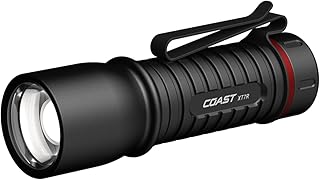 XT7R 1500 Lumen Rechargeable LED Flashlight with Magnetic Mount, Slide Focus, and Pocket Clip, Black
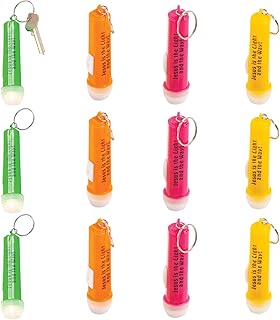 Express Jesus is The Light Flashlight Key Chains (Set of 12) Religious Party Supplies - VBS 2026 Vacation Bible School Supplies/Decor
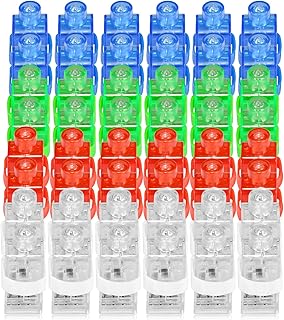 CADE ELECTRONIC Finger Lights- 50Pcs Finger Flashlights for Kids-Bachelorette Party Favors - Party Supplies for Parties Cheering Novelty Toys for Kids, Adult